Young Men's Behavioral Health Treatment
For Mental Health, Trauma, & Substance Misuse
The Creek at Momentum Recovery was built by a team of guys who spent years working in treatment and saw how often it failed young men. So we built something different: a program young men want to be part of, in a coastal community that earns buy-in from even the most resistant. Our flexible continuum of care makes room for the way healing really happens, which is rarely in a straight line.

Built for Young Men
For young men, their pain tends to show up as anger, withdrawal, risk-taking, or an apathy that's easy to mistake for laziness. Stigma, and never having learned the words for what's going on inside, keep many of them from asking for help until things fall apart.
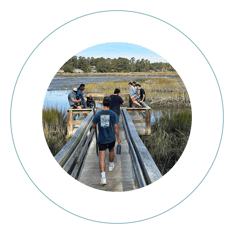
The Creek meets young men where they are. Treatment here looks like group sessions with guys who understand each other, afternoons on the water, and a team that takes the time to understand what's behind the behavior instead of just reacting to it.
What We Treat
The Creek welcomes young men facing a wide range of mental health challenges, including:
Aggression
Anxiety
Apathy
Bipolar Disorder
Borderline Personality Disorder
Depression
Disordered Eating
Mood Disorders
OCD
Panic Disorder
PTSD
Self-Harm
Substance Use Disorder
Trauma
Every guy who joins The Creek starts with a thorough mental and physical health assessment. We look at his history, what he's struggling with now, and what he wants his life to look like. From there, our clinicians and community leaders build a treatment plan around him that changes as he does.
How We Treat It
The Creek combines proven therapies with creative adaptations, so everyone gets care that fits him. Treatment may include:


Cognitive Behavioral Therapy (CBT):
Practical tools for recognizing and changing the thought and behavior patterns that keep him stuck.

Dialectical Behavior Therapy (DBT):
Skills for handling intense emotions and getting through hard moments, especially effective for depression and suicidal thinking.
-1.png?width=70&height=59&name=heart%20(1)-1.png)
Trauma-Informed Care:
Trauma often shows up differently in young men. Our entire team is trained to create an environment where it's safe to look at what happened.

Art & Music Therapy:
Creative outlets give young men a way to express what they can't yet put into words.

Experiential Therapy:
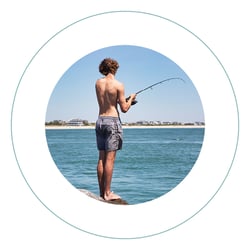
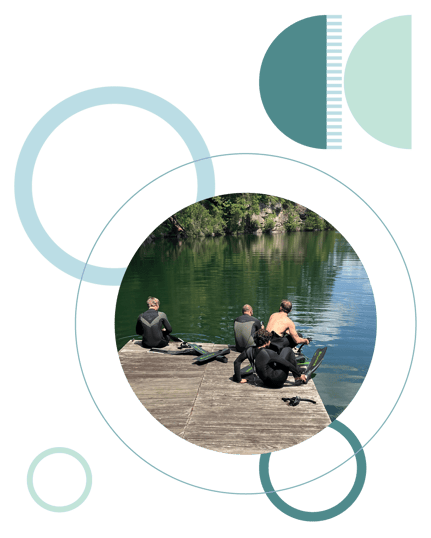
Surfing, free-diving, and fishing along the North Carolina coast build confidence and give young men a chance to practice new coping skills in real time.

Group Therapy:
Gender-specific groups create space for the kind of honesty and connection many young men have never had with other guys.
The Four Phases of The Creek
Young men at The Creek move through four phases of care. Each phase gives a little more independence as he builds the skills to handle it. Along the way, he gets case management, family programming, adventure-based therapy, educational and vocational support, financial skills development, nutritional support, and time for recreation.

Phase 1: DOCK
Primary Mental Health & Substance Use Treatment
Dock is where the foundation gets laid. Young men step away from the pressures of everyday life and focus on themselves and their new community. Most of the day is spent in group therapy, individual therapy, family therapy, and adventure-based activities. With guidance from our clinicians, they begin to uncover what's behind their mental health and substance use challenges.

Phase 2: ANCHOR
Extended Care
Anchor works much like an intensive outpatient program. Young men spend half the day in the same groups and activities they had in Dock, and use the rest of the day to practice their new skills with more freedom and less structure.

Phase 3: HARBOR
Recovery-Supportive Living
While in Anchor, young men live together in our recovery-supportive home in Wilmington. Shared meals, shared chores, and shared downtime turn a group of strangers into a support system.

Phase 4: COMPASS
Change Management
In Compass, young men live in housing of their choice and keep working one-on-one with their therapist and case manager. They stay involved in the recovery community and are encouraged to keep joining experiential activities with the rest of The Creek. Regular accountability structures help them stay focused during this critical stretch of early recovery.
Getting Outside
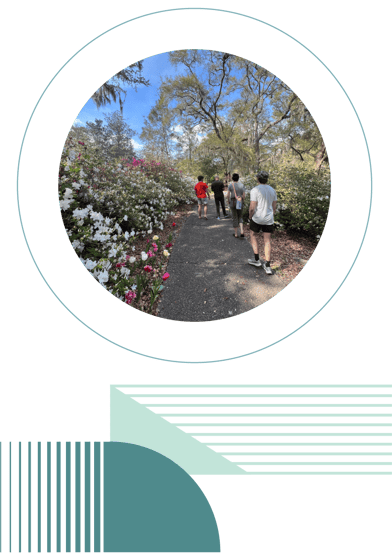
What does a better, happier life look like? For a lot of young men, it starts with rediscovering what they enjoy. Our coastal location makes it easy to introduce healthy activities that can last long after treatment ends, including:
Swimming
Surfing
Fly Fishing
Paddle Boarding
Kayaking
Softball
A Community of Men in Recovery
The Creek gives young men the support a lasting recovery depends on.

Peer Support
Experiential activities, 12 Step meetings, and pickup basketball games help young men build real friendships with other men in recovery.

Family Involvement
Families are brought into the process when appropriate, through family therapy sessions and intensive workshops.

Alumni Network
Graduates stay connected through regular events, online groups, and an alumni community that keeps showing up for each other.


Dual Diagnosis Treatment
For many young men struggling with mental health issues, the desperate attempt to self-medicate may devolve into substance abuse. Dually licensed for mental health and substance use disorder treatment, The Creek at Momentum Recovery can comprehensively treat both issues at the same time and in the same context. Learn more about our addiction treatment at the link.
Be Better. Be Happier. Belong.
If a young man you love is struggling, there is a way forward. Reach out by phone, chat, or web form, and our team will help you figure out the right next step.