There is a version of therapy most people picture when they hear the word: two people in a room, one talking, one listening. It is a format that has helped millions of people. It is also a format that, for a specific population, runs into a very specific wall.
For young adults navigating co-occurring mental health and substance use disorders, that wall has a neurological explanation.
Research published in the Behavioural Brain Research journal found that the prefrontal cortex, the part of the brain governing impulse control, emotional regulation, and self-reflection, does not fully develop until around age 25. For young adults already dealing with the compounding effects of addiction and mental illness, asking them to access insight through conversation alone is, in many ways, asking them to run a program on hardware that isn't finished yet. The tools that talk therapy relies on most are often the exact tools still under construction.
This is not an argument against talk therapy. CBT, DBT, and trauma-focused modalities remain cornerstones of dual diagnosis treatment and for good reason. The argument is for a more complete picture of what treatment can look like when it is designed around how young adult brains actually work.
What Experiential Therapy Actually Does Differently
Experiential therapy takes the same clinical goals as traditional therapy and pursues them through a different route. Instead of asking someone to describe a feeling, it creates conditions that produce one. Instead of explaining what trust looks like, it builds a moment in which trust becomes a lived memory rather than a concept.
That distinction matters because of how memory and learning actually encode in the brain. Experiences that involve the body, novelty, emotional activation, and social connection create stronger and more durable neural pathways than passive reflection. For someone in early recovery whose sense of self has been shaped primarily by shame and failure, the felt experience of doing something hard and coming out the other side is not just therapeutic in theory. It is neurologically meaningful.
The research supports this. A comprehensive 2013 meta-analysis by Bowen and Neill, reviewing 197 studies across more than 17,000 participants, found a moderate short-term effect size for adventure-based and experiential interventions, with the strongest outcomes in clinical and self-concept measures. Critically, the study found that those positive effects were sustained over the long term and that effectiveness increased with participant age, making young adults a particularly well-matched population for this approach.
The Dual Diagnosis Problem Experiential Therapy Addresses
Young adults with co-occurring disorders face a treatment engagement challenge that goes beyond motivation. Research on dually diagnosed youth consistently identifies poor treatment engagement and retention as among the most significant barriers to successful outcomes. Programs that feel clinical, passive, or disconnected from real life tend to lose this population before the work can take hold.
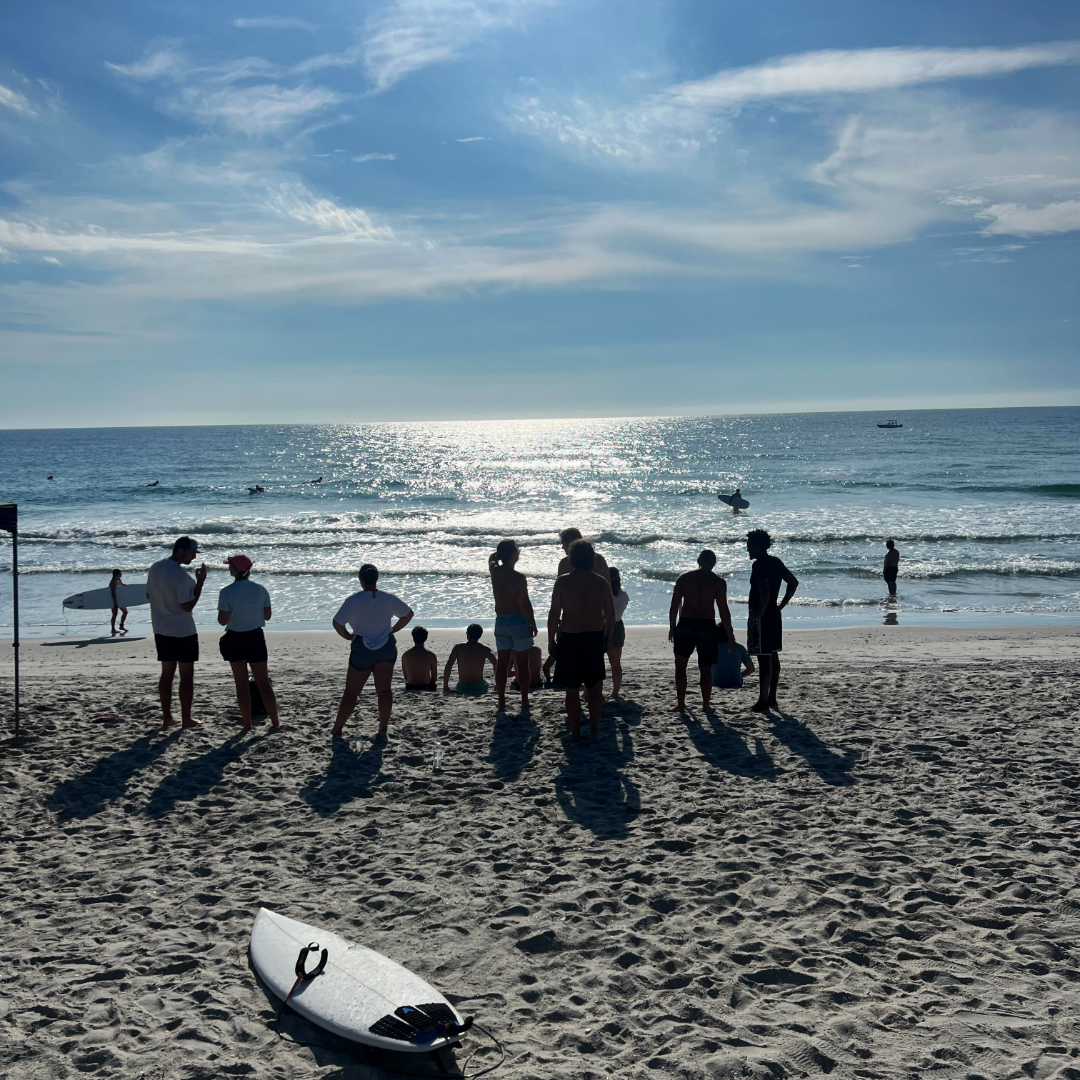
Experiential therapy changes the texture of treatment. Surfing, kayaking, hiking, rock climbing, and aquatic programming are not breaks from the clinical process. When facilitated by trained clinicians and integrated into a treatment plan with intentional debriefs, they are the clinical process, delivered in a format that young adults actually stay in.
A systematic review published in PMC found that integrated treatment for dual diagnosis, in which both substance use and mental health are addressed simultaneously by the same clinical team, produced significantly greater reductions in PTSD symptoms and overall outcomes than non-integrated approaches. Experiential modalities, when embedded within that integrated framework, extend its reach by engaging clients on a physical and emotional level that clinical sessions alone often cannot.
Not a Replacement. An Extension.
It is worth being precise about what experiential therapy is and is not. It does not replace individual therapy, group work, or evidence-based clinical modalities. At Momentum Recovery, it sits alongside them as part of a comprehensive dual diagnosis treatment model designed specifically for young men and women.
The Wilmington, NC coastline is not incidental to how that model works. The water is a treatment environment. The challenge of learning to surf, the stillness required for free diving, the navigation of an unfamiliar current: these are clinical experiences that reach places a therapy room sometimes cannot.
For young men at The Creek and young women at The Cove, that is not a supplement to good treatment. It is part of what makes good treatment stick.
Ready to learn more about how we approach dual diagnosis treatment for young adults? Reach out to our team or call 888-815-5502.